

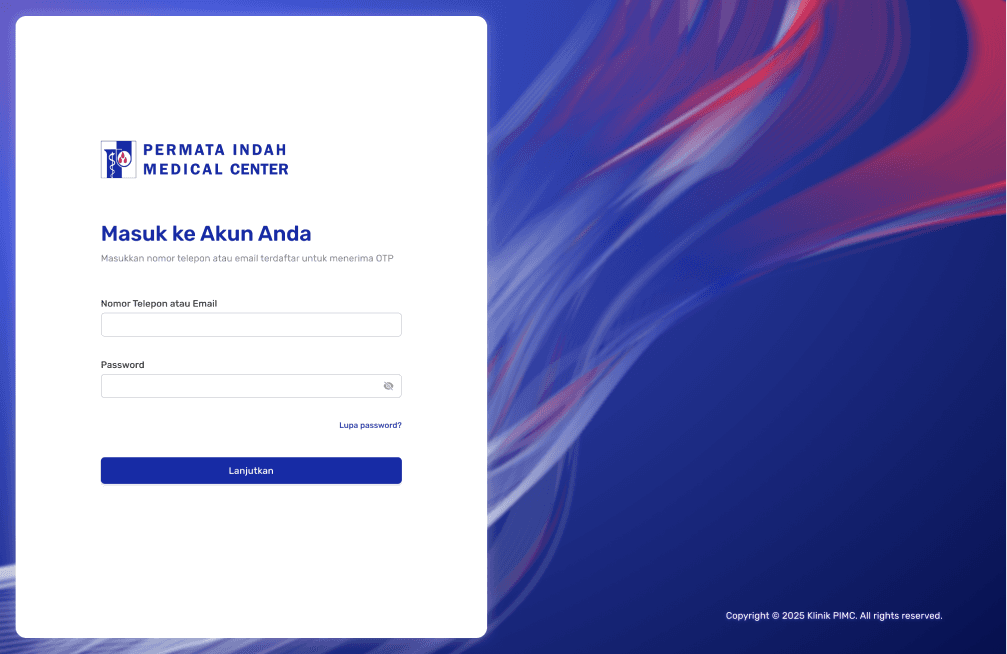
PIMC is a digital platform designed to support medical check-up operations, helping internal teams manage examination workflows, input results, and generate reports more efficiently.
Medical check-up operations often involve a large volume of structured data, repetitive input tasks, and result validation across multiple examination categories. When handled manually or through fragmented tools, this can create delays, inconsistencies, and higher operational risk.
PIMC was designed to streamline this process by centralizing examination workflows into one system.
Problem
During the discovery phase, several operational challenges were identified.
High Data Input Complexity
Medical check-up processes require staff to input many different examination results, including:
• physical examination results
• laboratory test values
• diagnostic observations
The large number of fields made the workflow slow and prone to mistakes.
Inconsistent Result Validation
Different companies and examination packages have their own medical reference ranges for laboratory values.
Without automated validation, staff needed to manually check whether results were within normal ranges.
This increased the risk of reporting inconsistencies.
Fragmented Examination Workflow
The medical check-up process typically involves multiple steps:
registering examination participants
conducting physical examinations
entering laboratory results
generating final reports
Without a structured system, tracking these stages becomes difficult.
Goal
The main objective of PIMC was to improve operational efficiency for medical check-up teams.
The system was designed to:
• simplify examination data input
• reduce validation errors
• organize examination workflows clearly
• streamline report generation
Users
Medical Check-Up Staff
Responsible for recording examination results and managing patient data.
Key needs:
• quick and accurate data entry
• clear structure for different examination categories
• automated validation support
Medical Professionals
Doctors reviewing examination results need reliable data presentation to support diagnosis and recommendations.
Operations Team
Responsible for managing examination packages and ensuring smooth workflow across different examination stations.
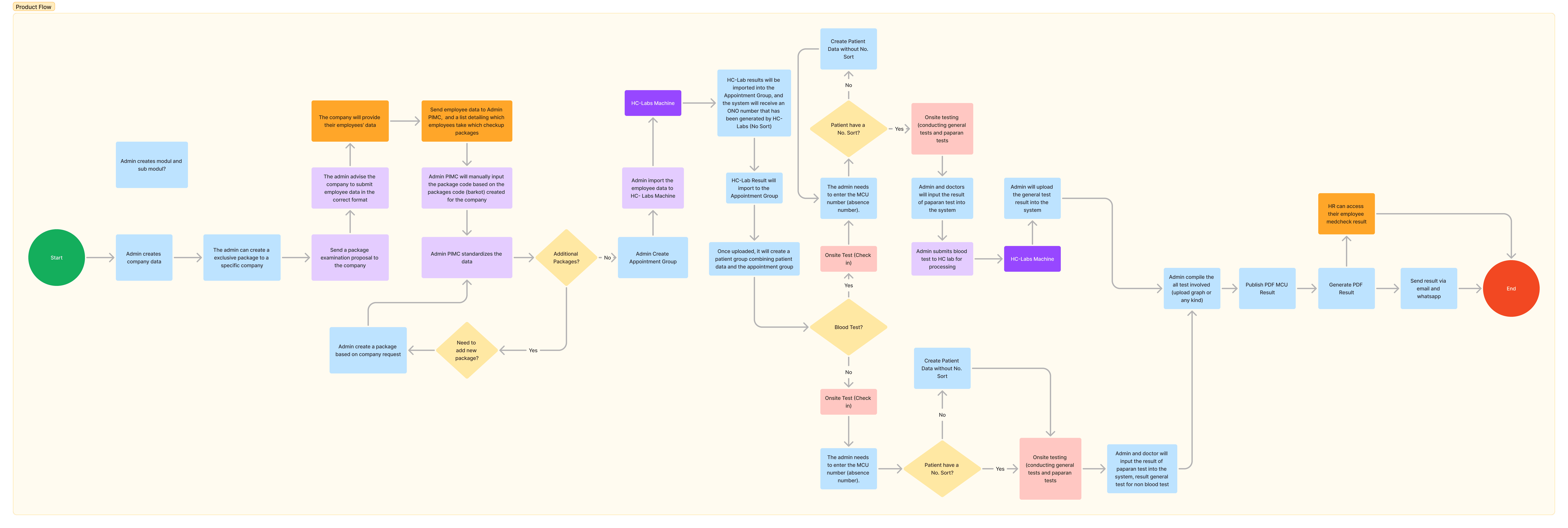
Permata Medical - Product Flow
Design Challenge
The biggest challenge in designing PIMC was handling large volumes of structured data without overwhelming the user interface.
Medical check-up workflows require staff to process many examination items quickly. If the interface becomes too complex, it can slow down operations.
The design needed to balance:
• data density
• input efficiency
• validation clarity
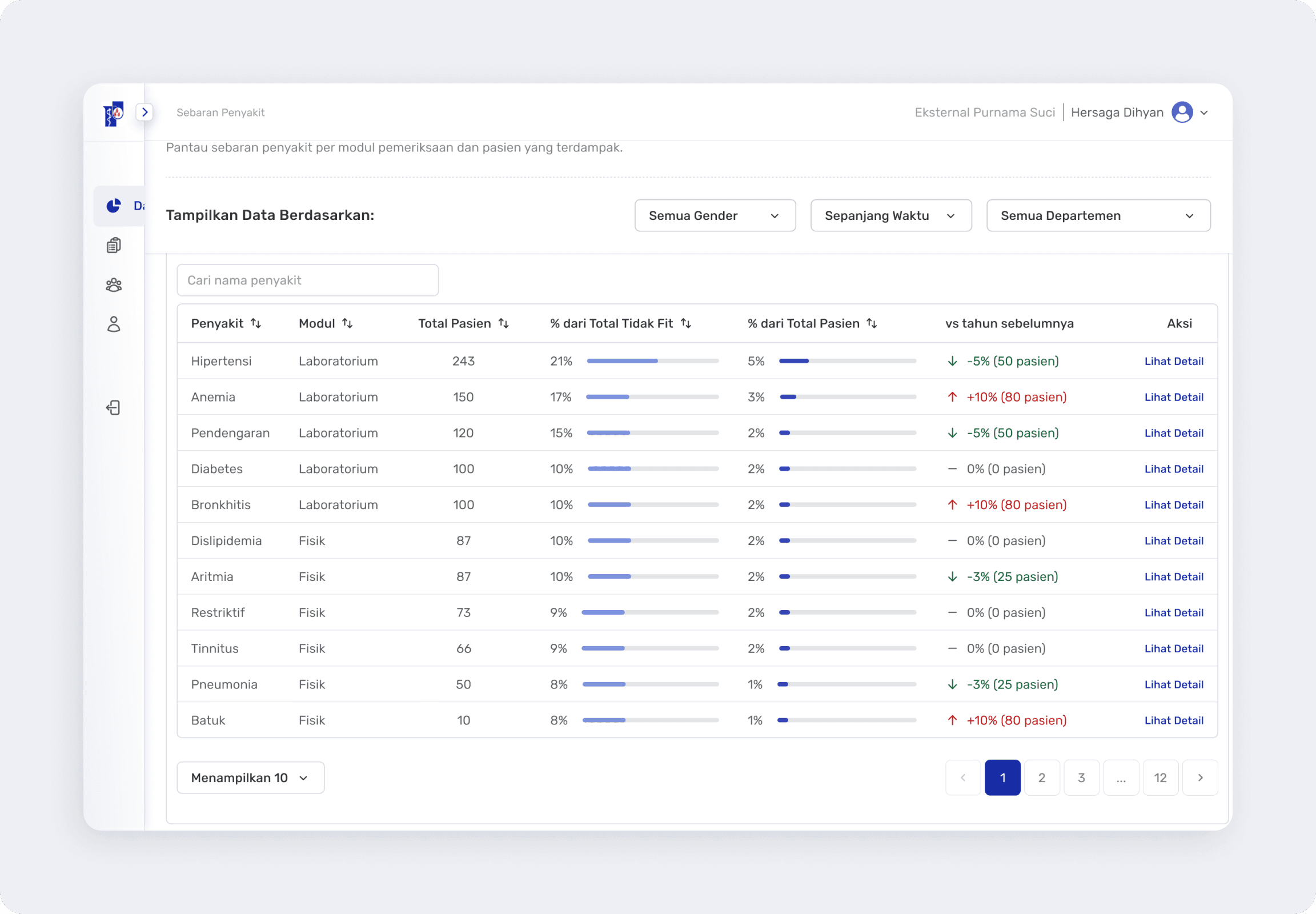
Client Portal - List of Disease
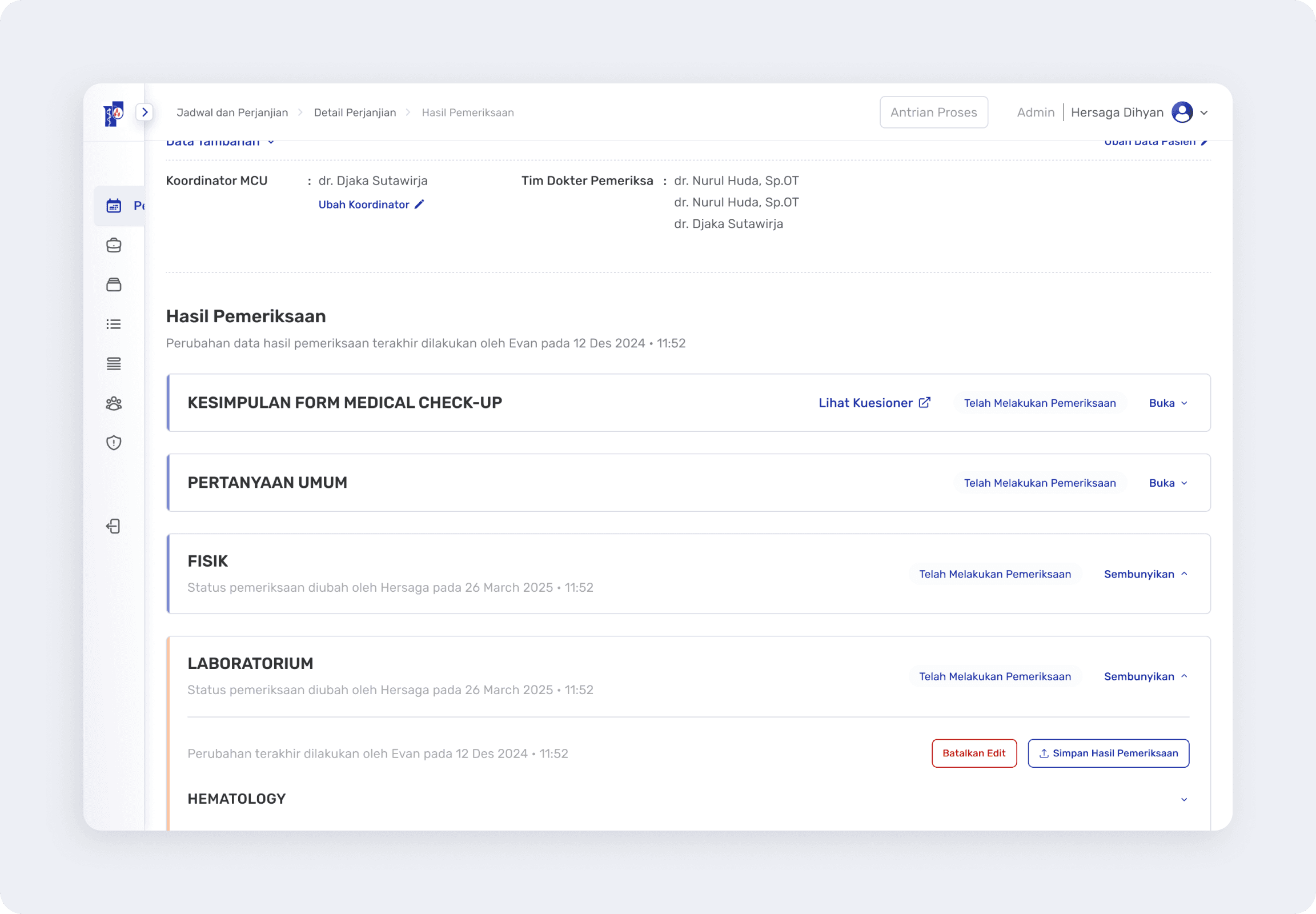
Admin Portal - Patient MCU Detail
Design Strategy
To address these challenges, the product design focused on three key principles.
Structured Examination Modules
Examination categories were separated into clear modules such as:
• physical examination
• laboratory examination
• diagnosis
This allowed staff to focus on one task at a time.
Contextual Data Validation
Laboratory values were automatically compared with predefined reference ranges.
If a result fell outside the normal range, the system highlighted the value to help staff identify abnormal results quickly.
Efficient Data Input
The interface was optimized for rapid input, reducing the need for excessive navigation between screens.
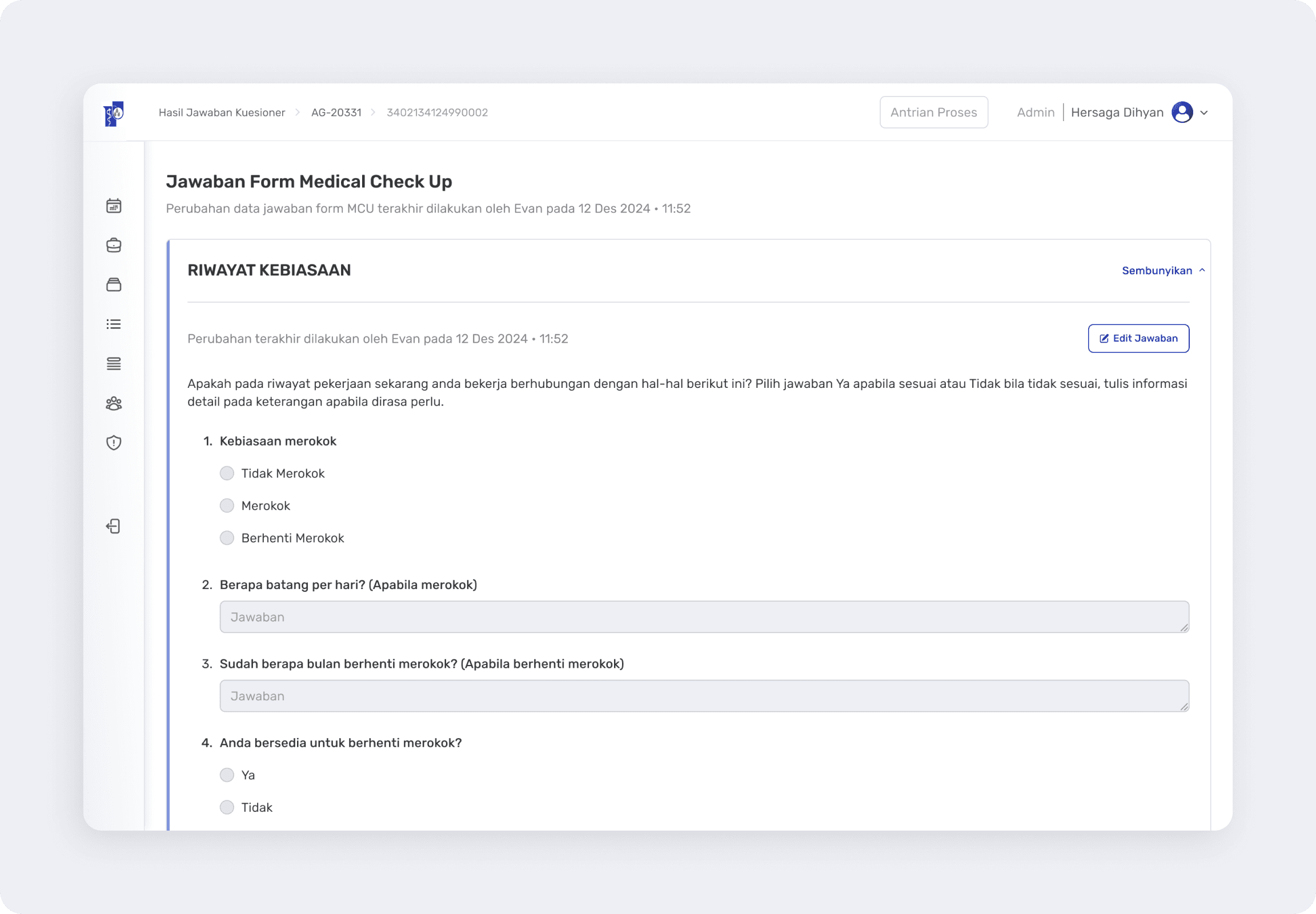
Admin Portal - Questionnaire List
Key Workflow
One of the most critical workflows is the physical examination recording process.
The simplified workflow looks like this:

Physical Examination Recording Flow
This structure ensures a clear and traceable examination process.
System Thinking
PIMC is not just a data entry system. It functions as an operational platform connecting several components:
• participant management
• examination package configuration
• examination data input
• validation rules
• report generation
By structuring these components into a unified system, PIMC reduces operational friction across the entire medical check-up process.
Reflection
Designing PIMC highlighted the importance of designing interfaces that support high-volume operational workflows.
Unlike consumer apps, operational systems must prioritize speed, clarity, and error prevention.
By focusing on structured workflows and contextual validation, the platform helps medical staff perform complex tasks more efficiently.
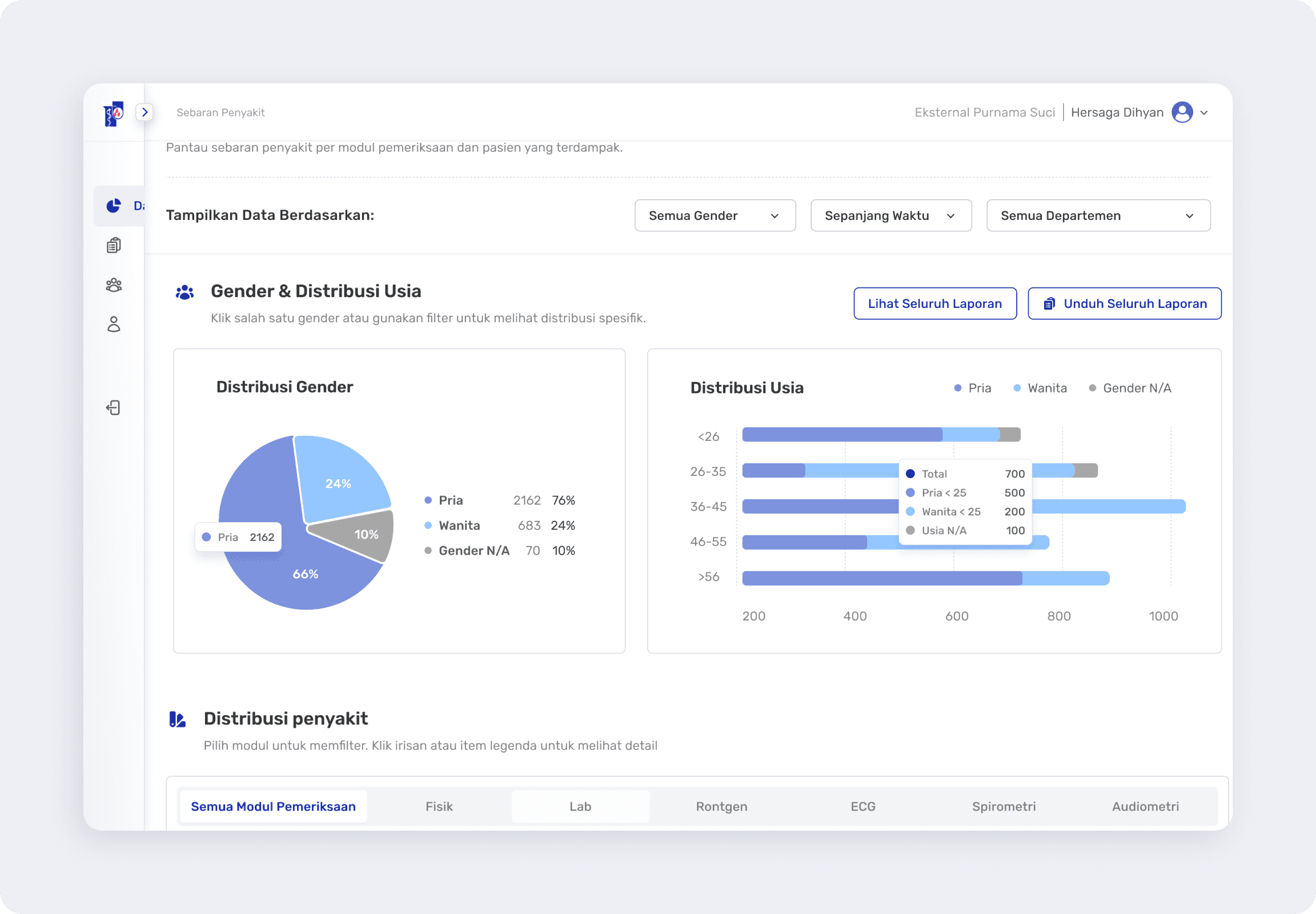
Client Portal - Dashboard
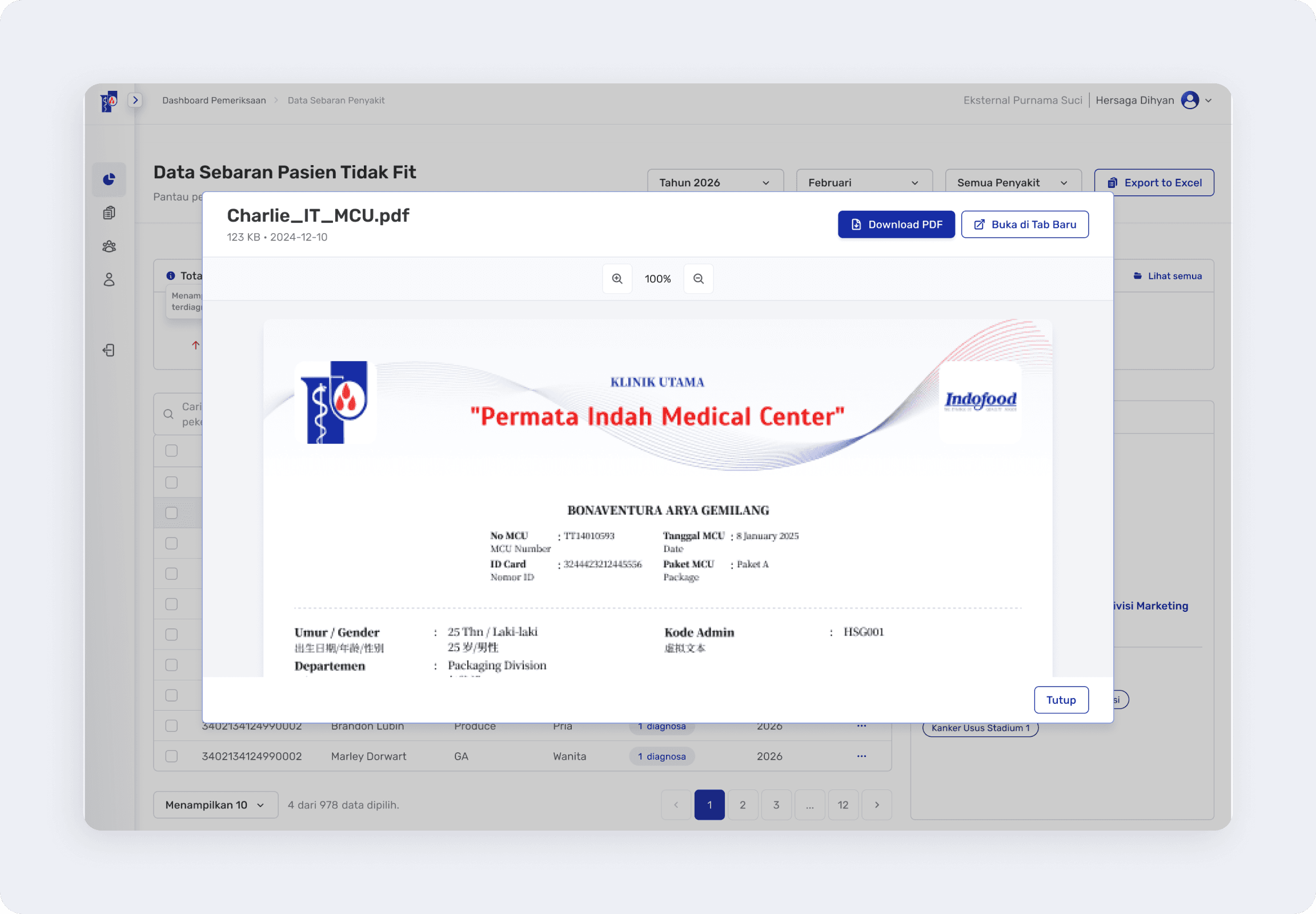
Client Portal - PDF Medical Check Up
Tell Me About Your Next Creative Project
Let’s create captivating digital experiences that engage audiences and drive meaningful brand interactions across diverse platforms
© 2026 Evan Himawan Saragih
Product and UI/UX Designer