

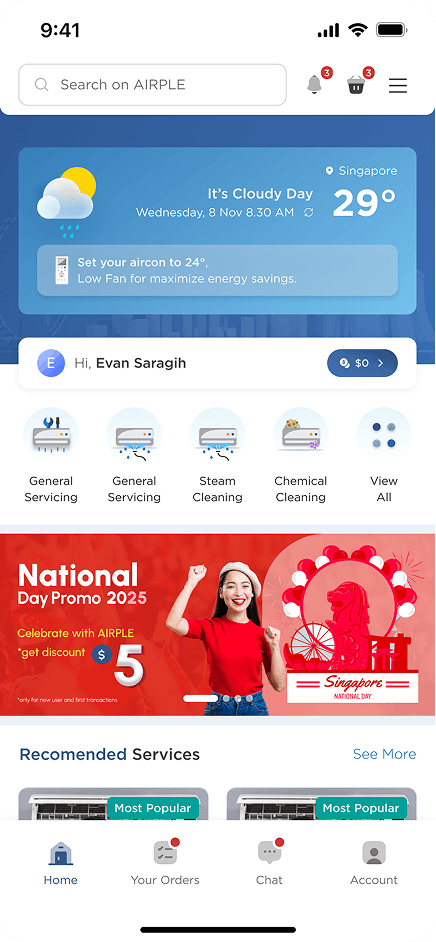
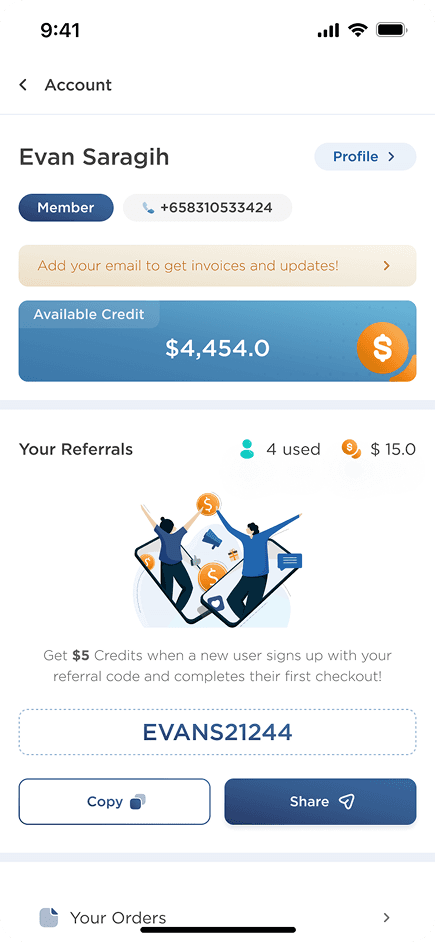
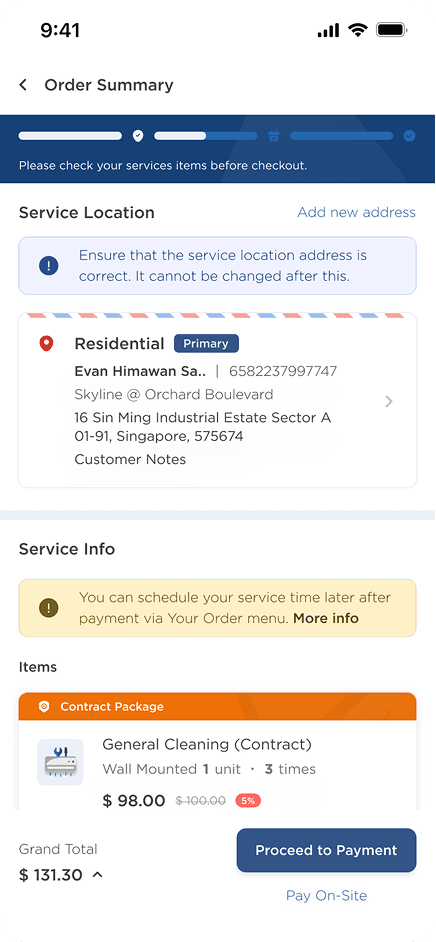
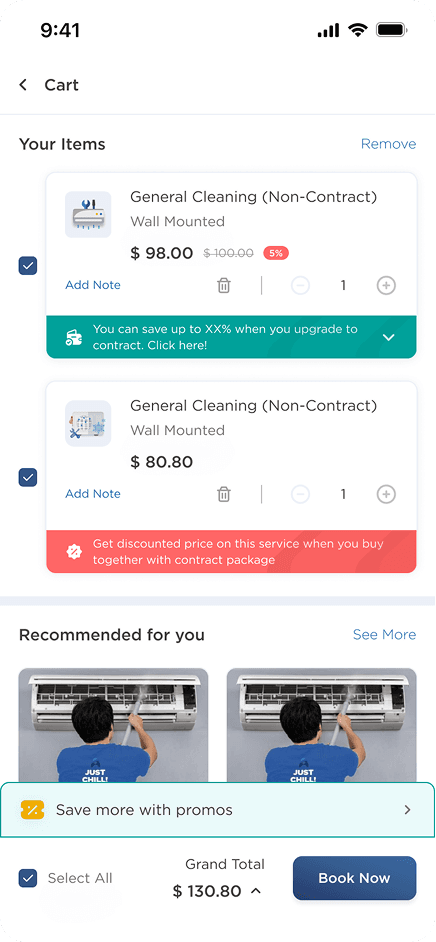
Air conditioning maintenance is a recurring need for households and businesses. However, the process of booking services often involves fragmented communication between customers, service providers, and technicians.
Problem
Before Airple, the service process relied heavily on manual coordination through messaging apps and phone calls. This resulted in inefficiencies such as:
delayed service confirmations
miscommunication between technicians and customers
lack of visibility into service status
Airple was designed to digitize the entire workflow, connecting customers, technicians, and operations teams into a unified platform.
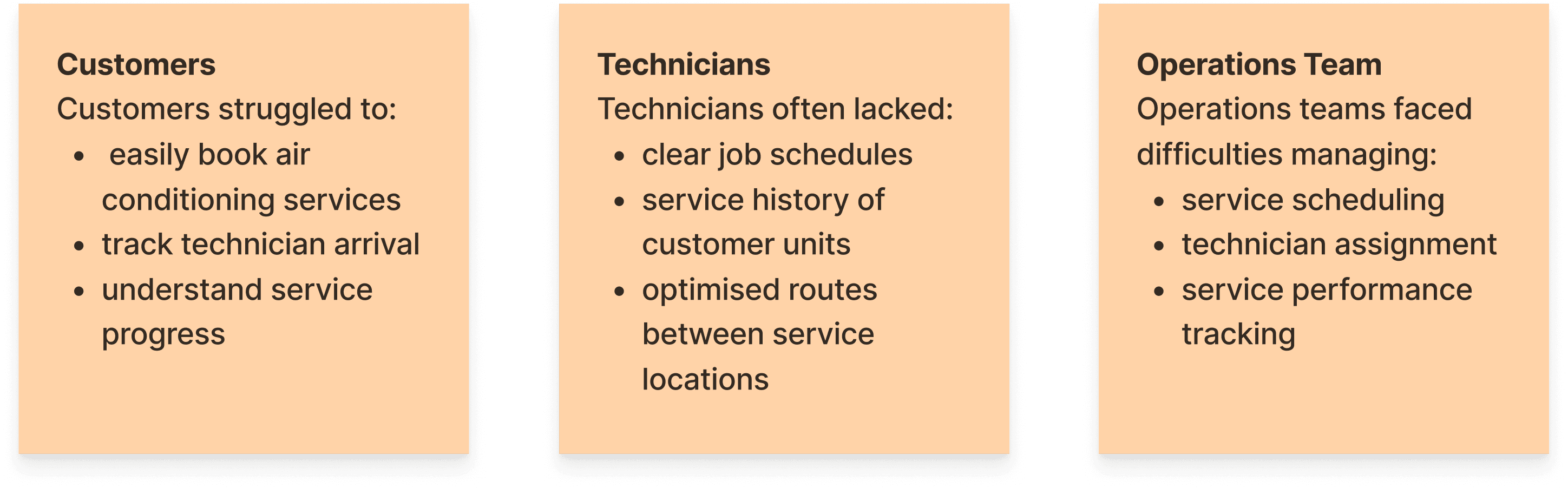
Through stakeholder discussions and operational observation, several challenges were identified.
Goals
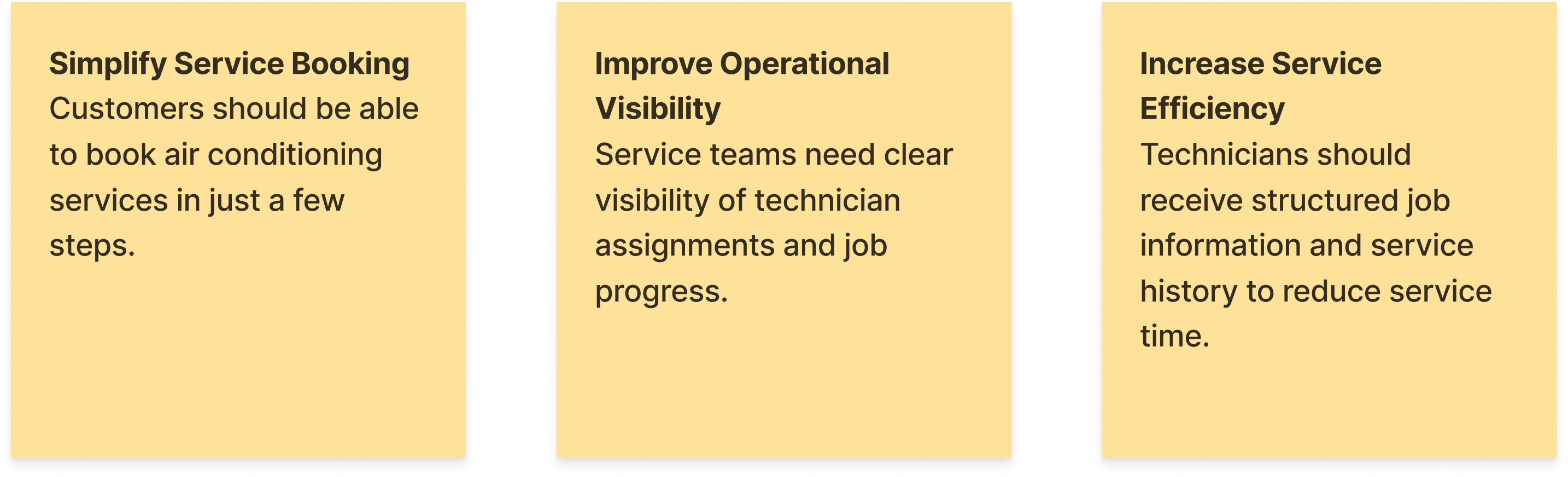
The project aimed to achieve three main objectives.
Research
To better understand the service workflow, I mapped the end-to-end process from booking to service completion.
Key observations:
most bookings were handled through WhatsApp
service records were not centralized
technicians relied on memory for previous service history
These insights helped identify opportunities for digital workflow improvements.
Design Strategy
The product experience was structured around three main user groups.
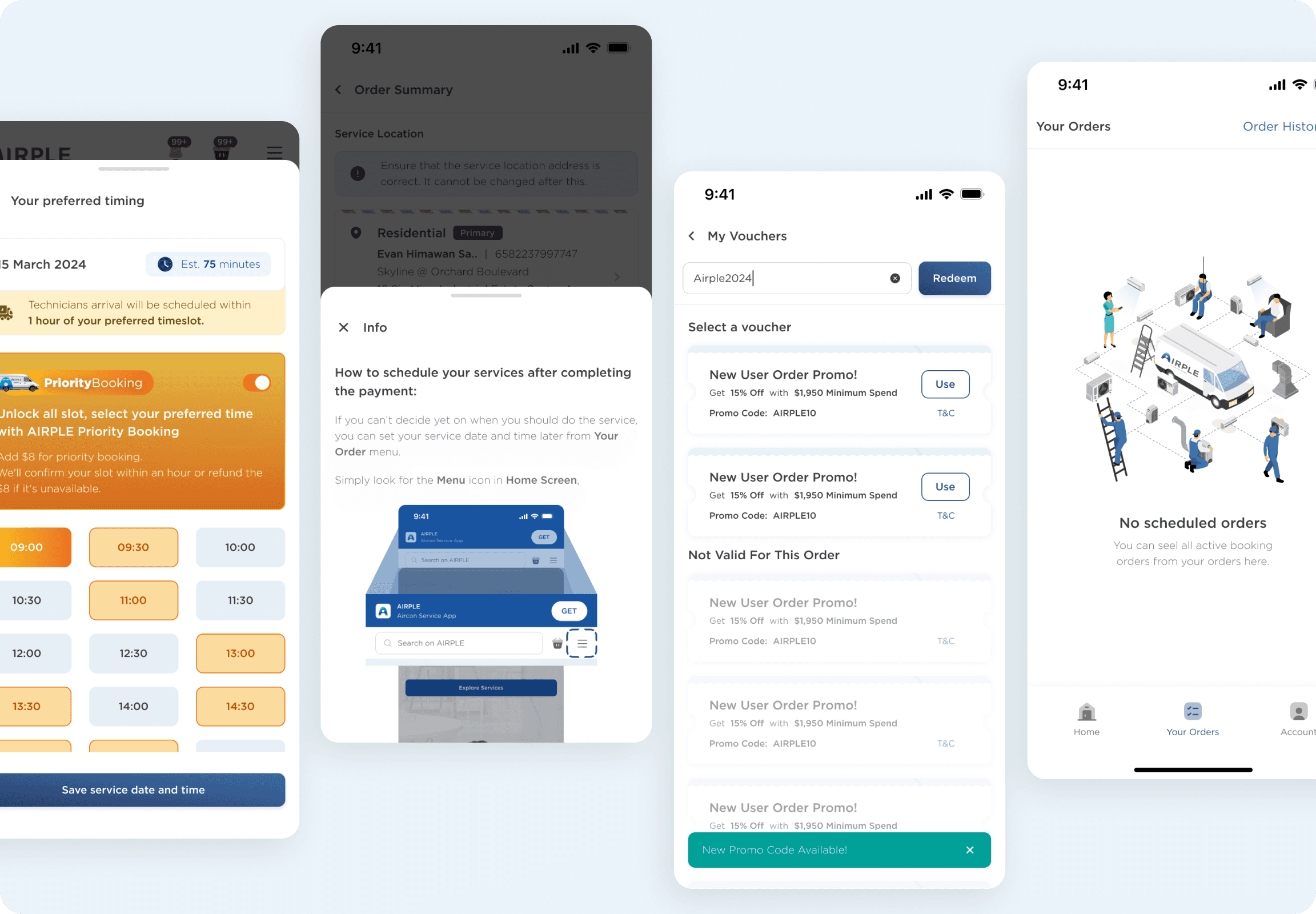
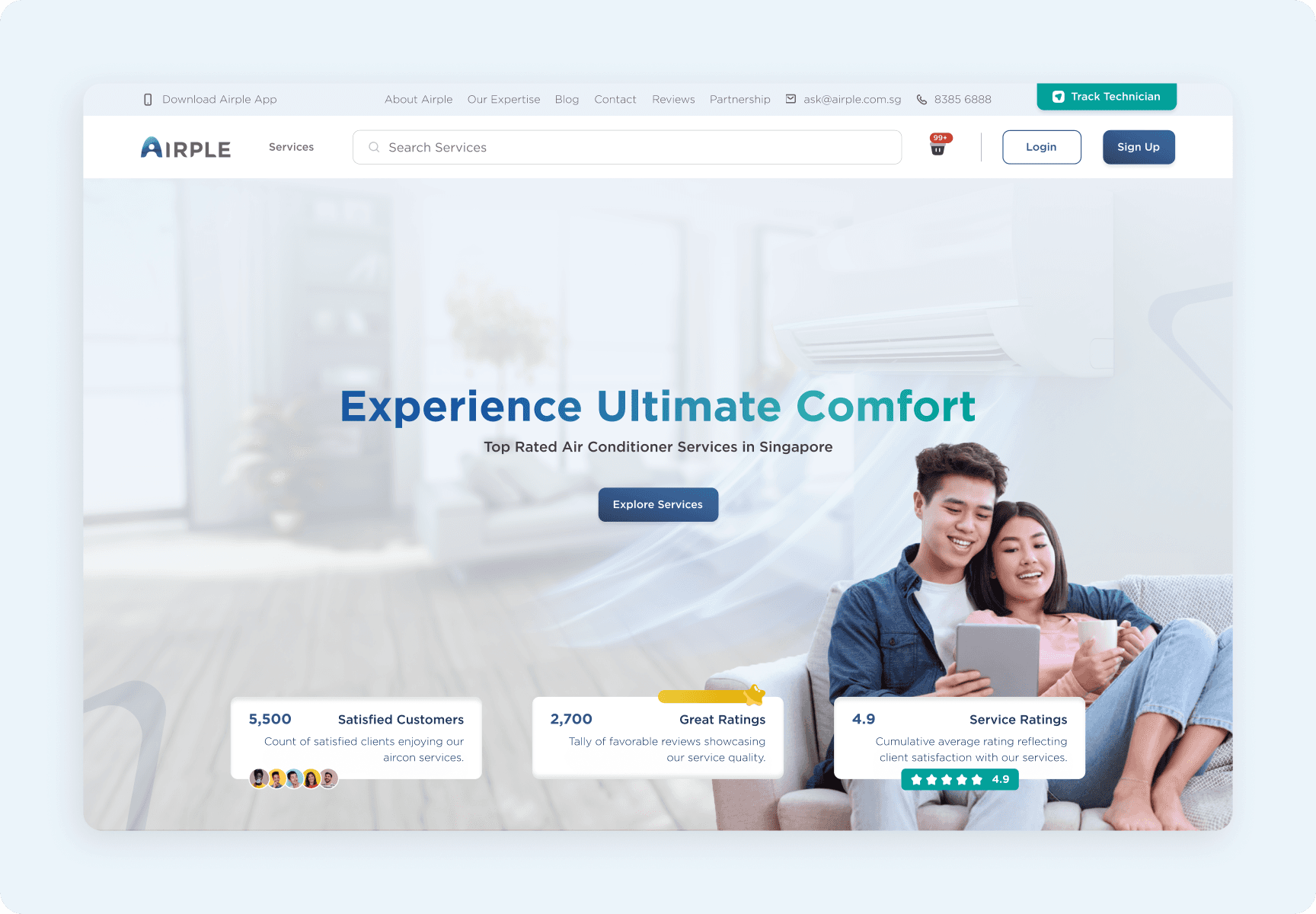
Customer Experience
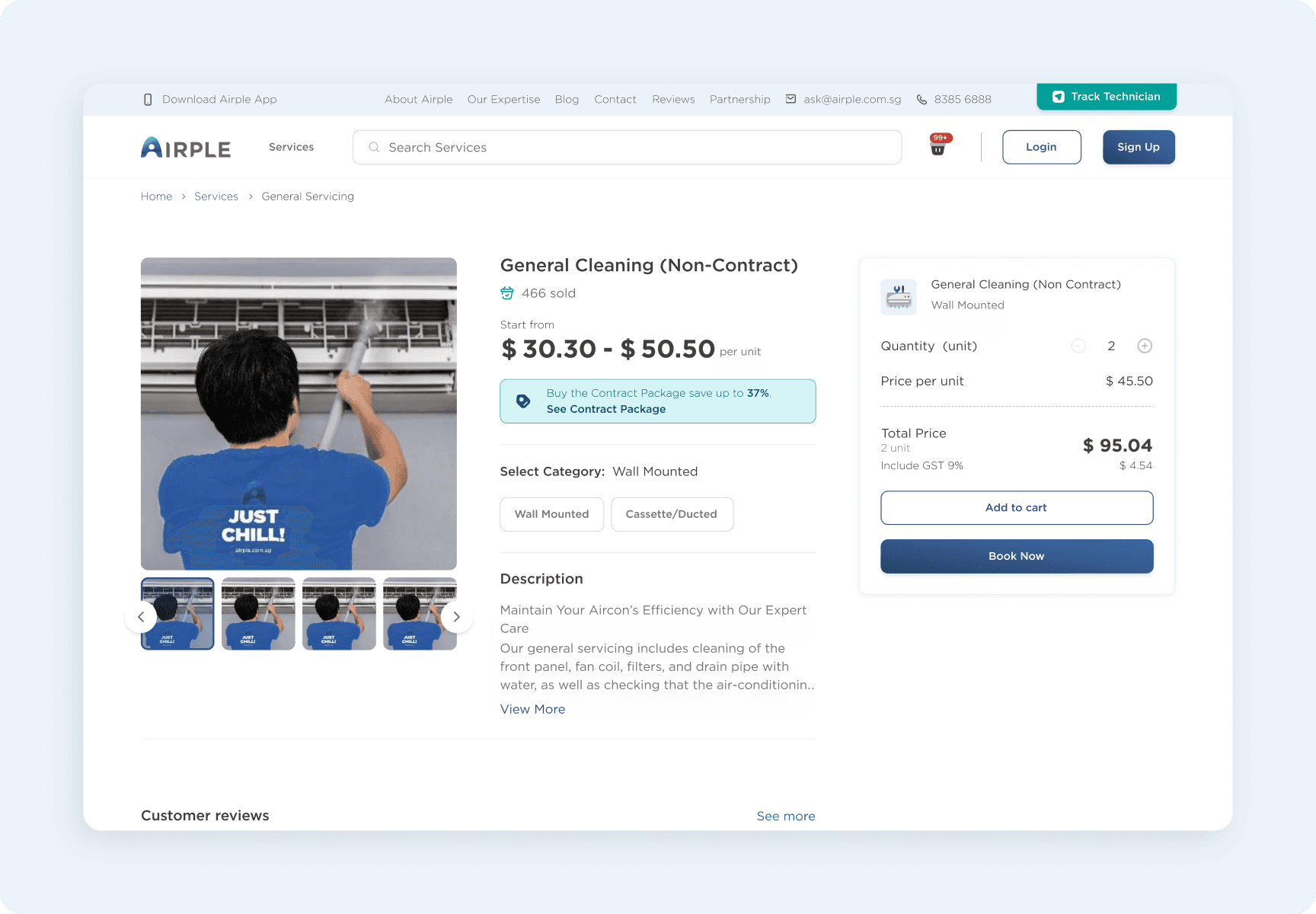
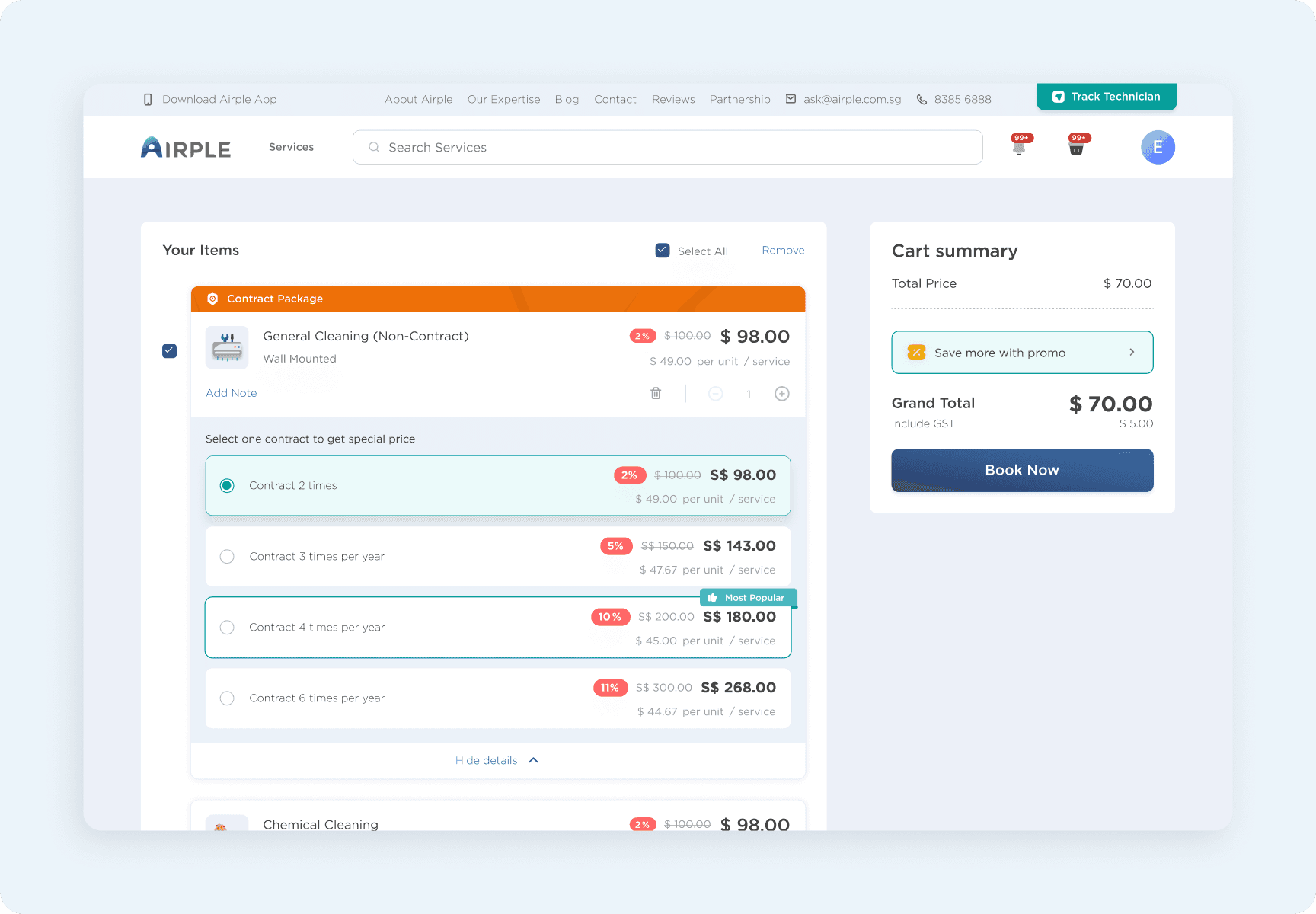
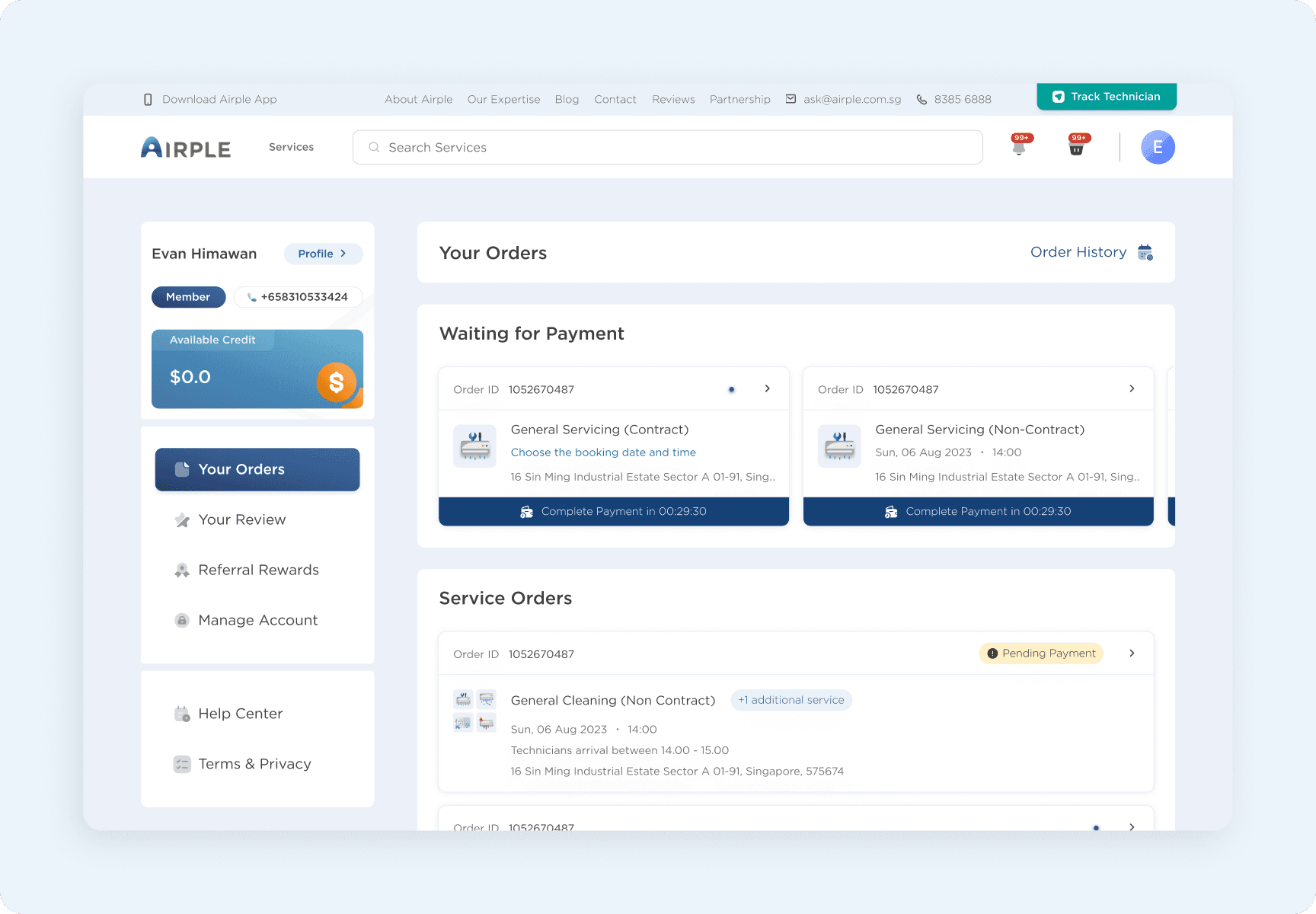
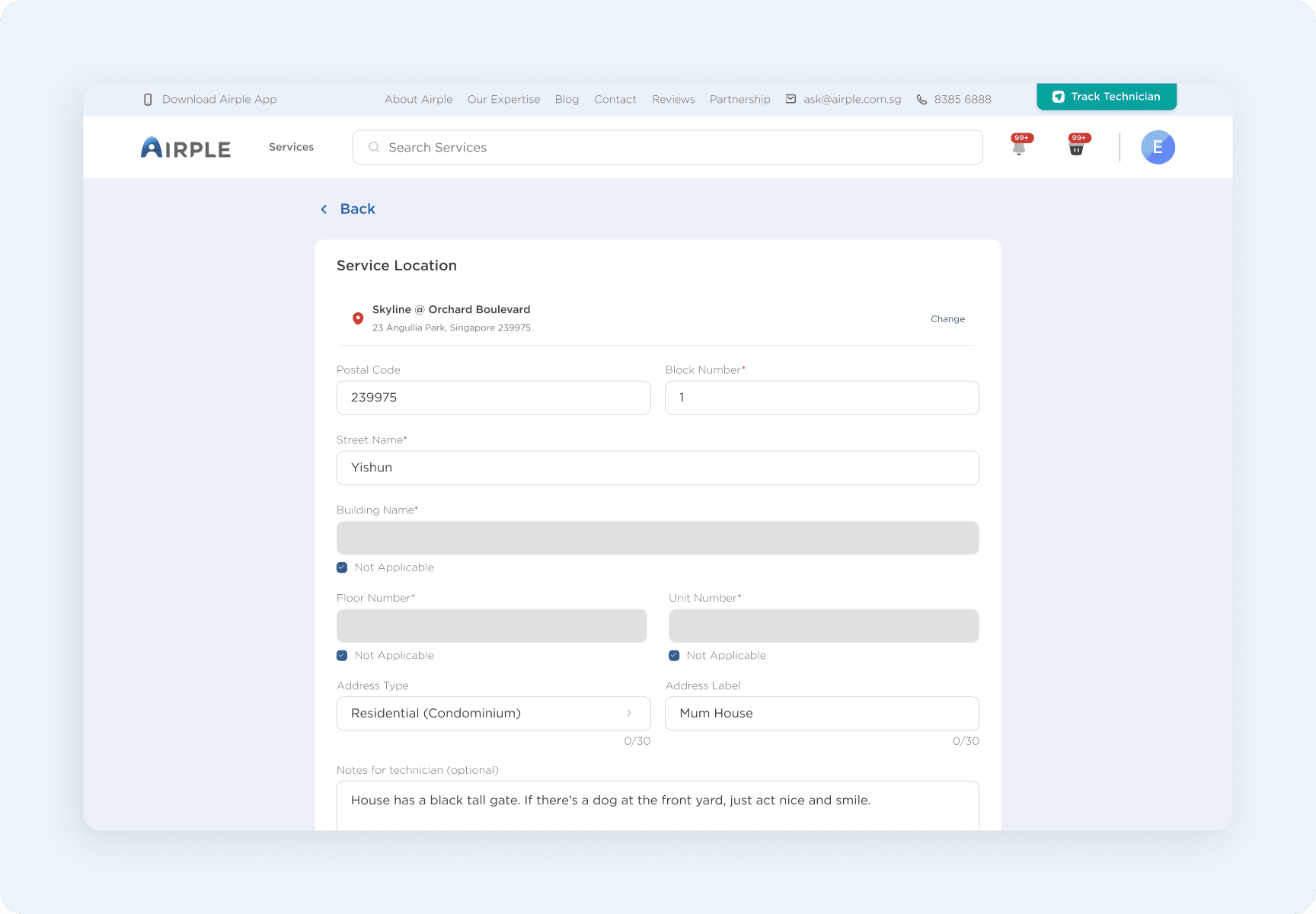
Focus on simplifying the booking process and improving transparency.
Key principles:
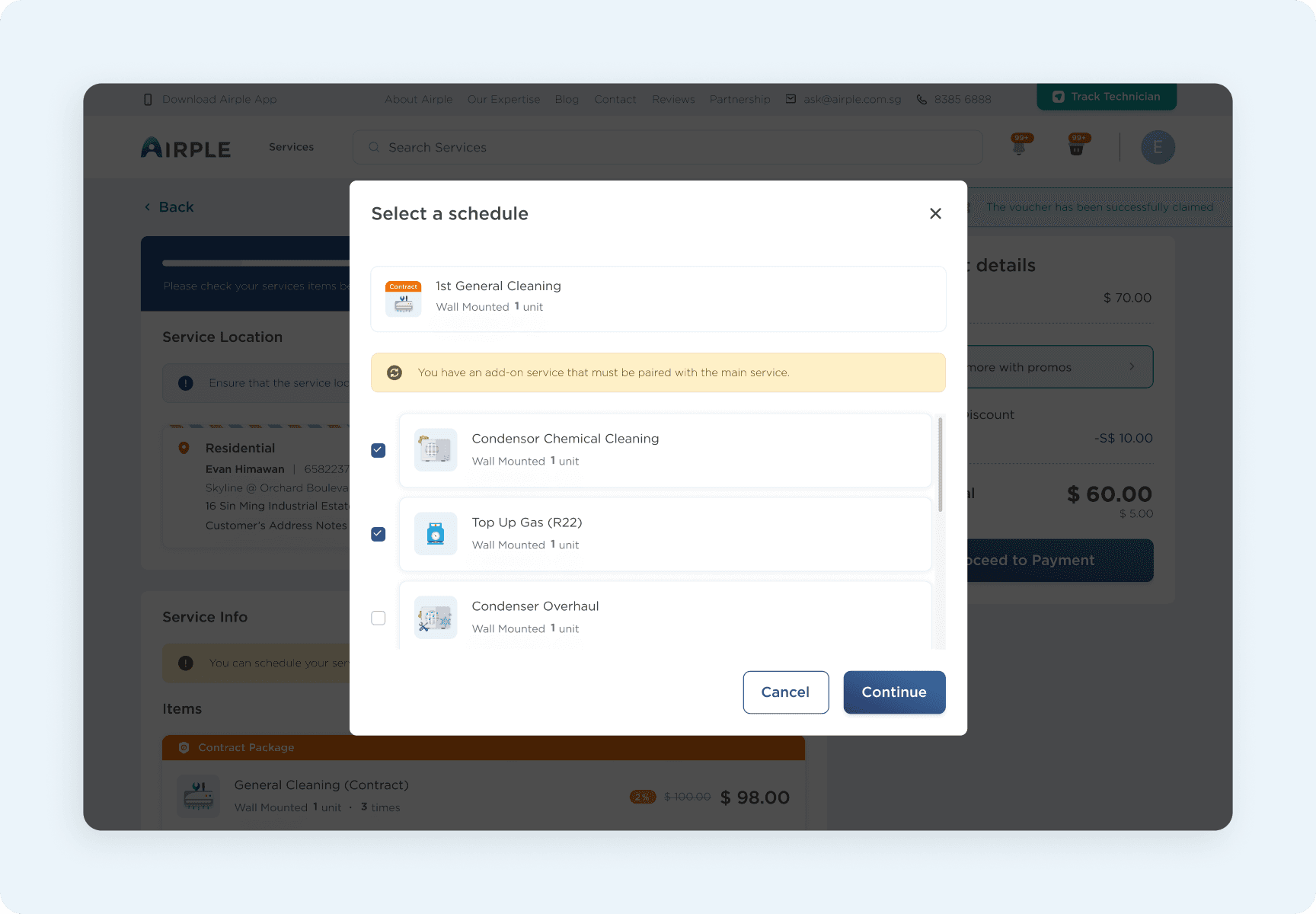
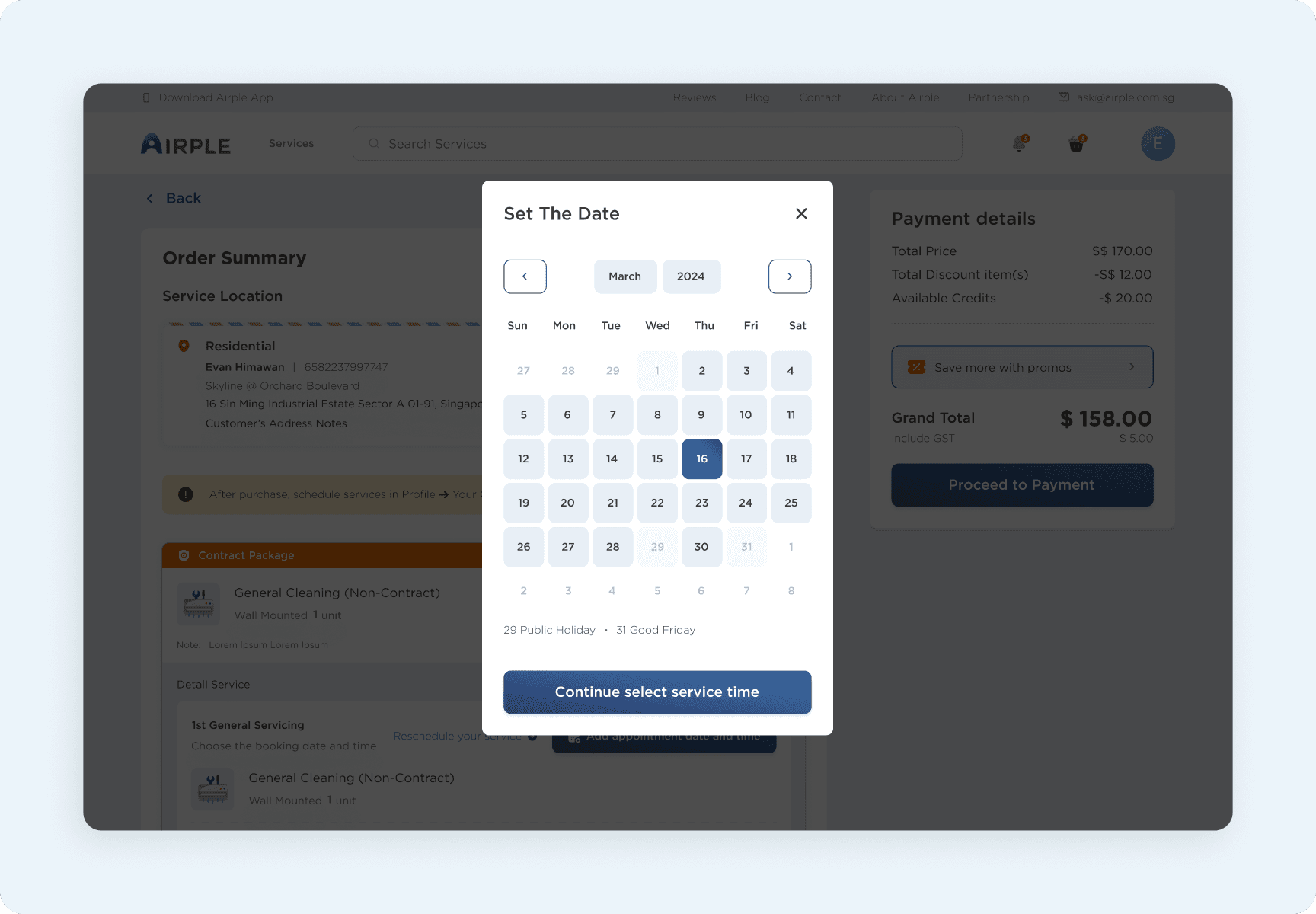
minimal steps for booking
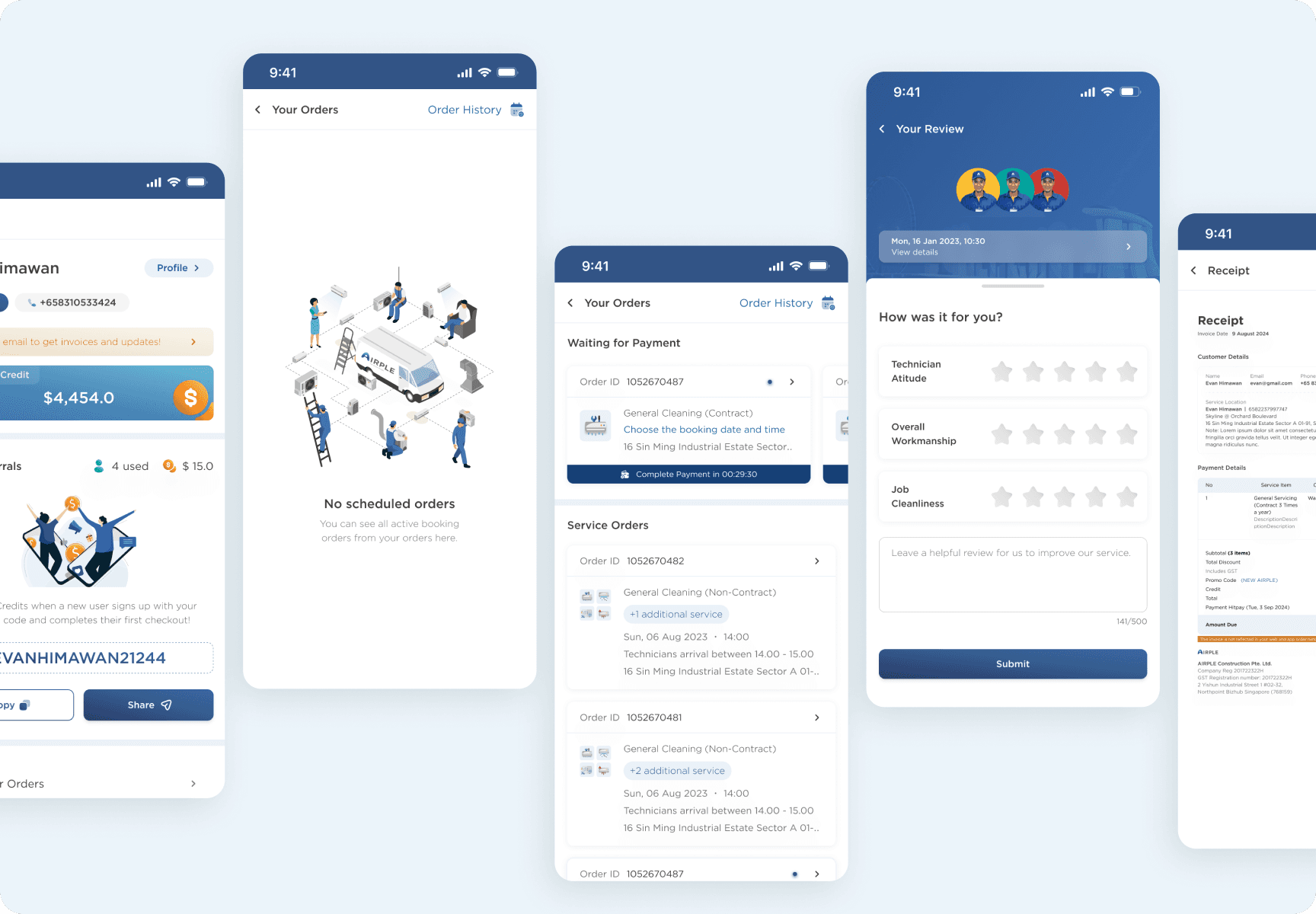
clear service status updates
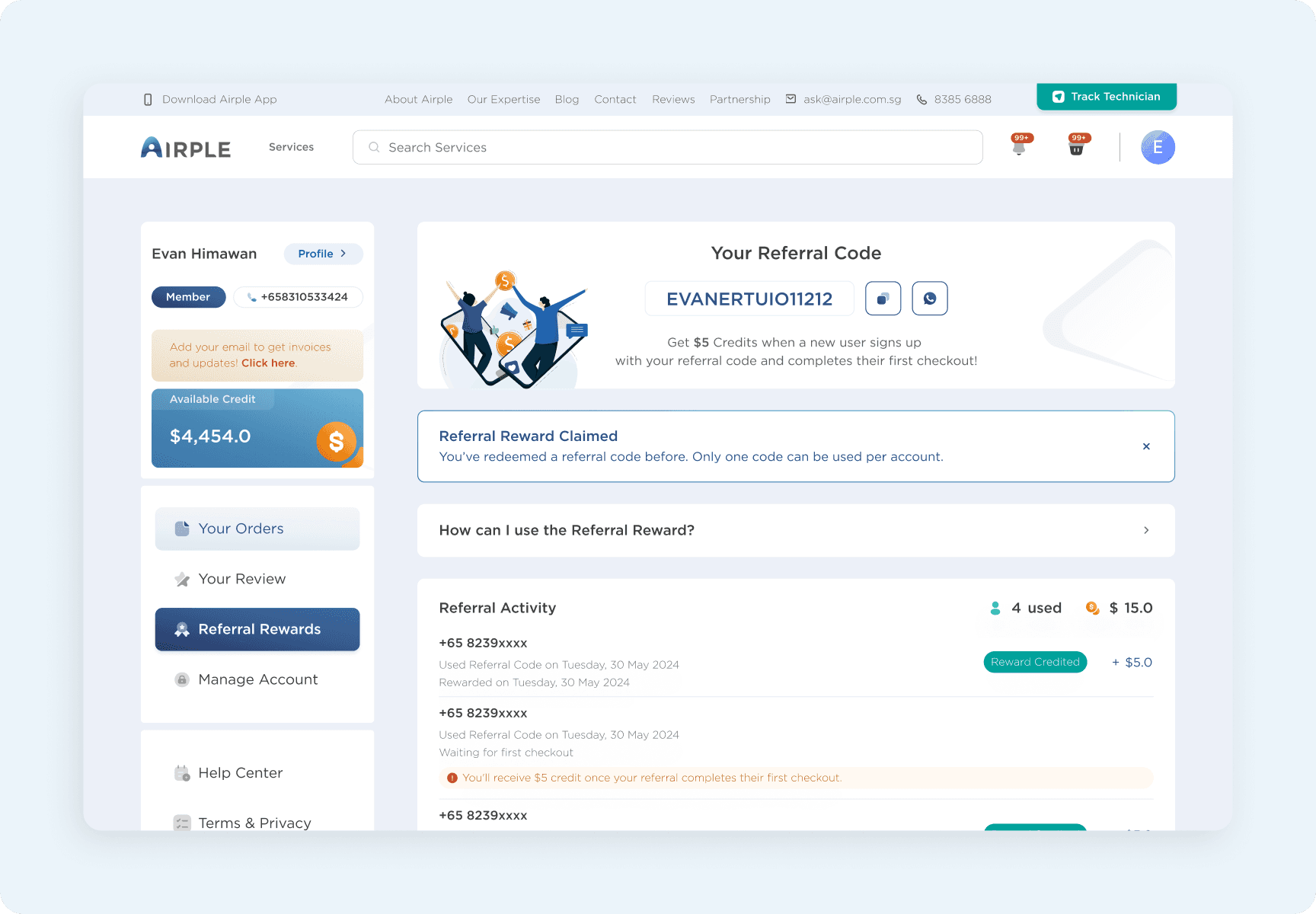
easy access to service history
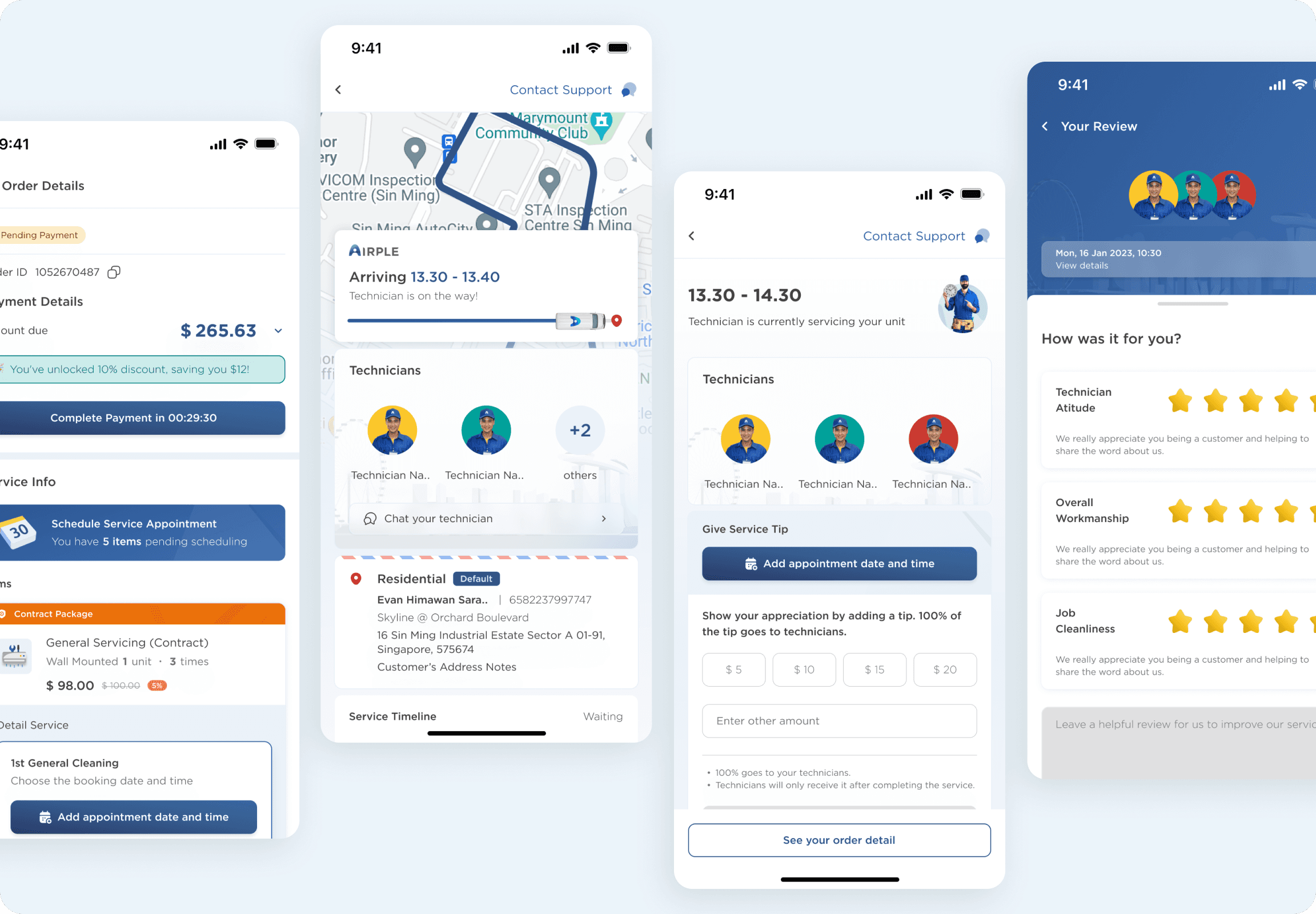
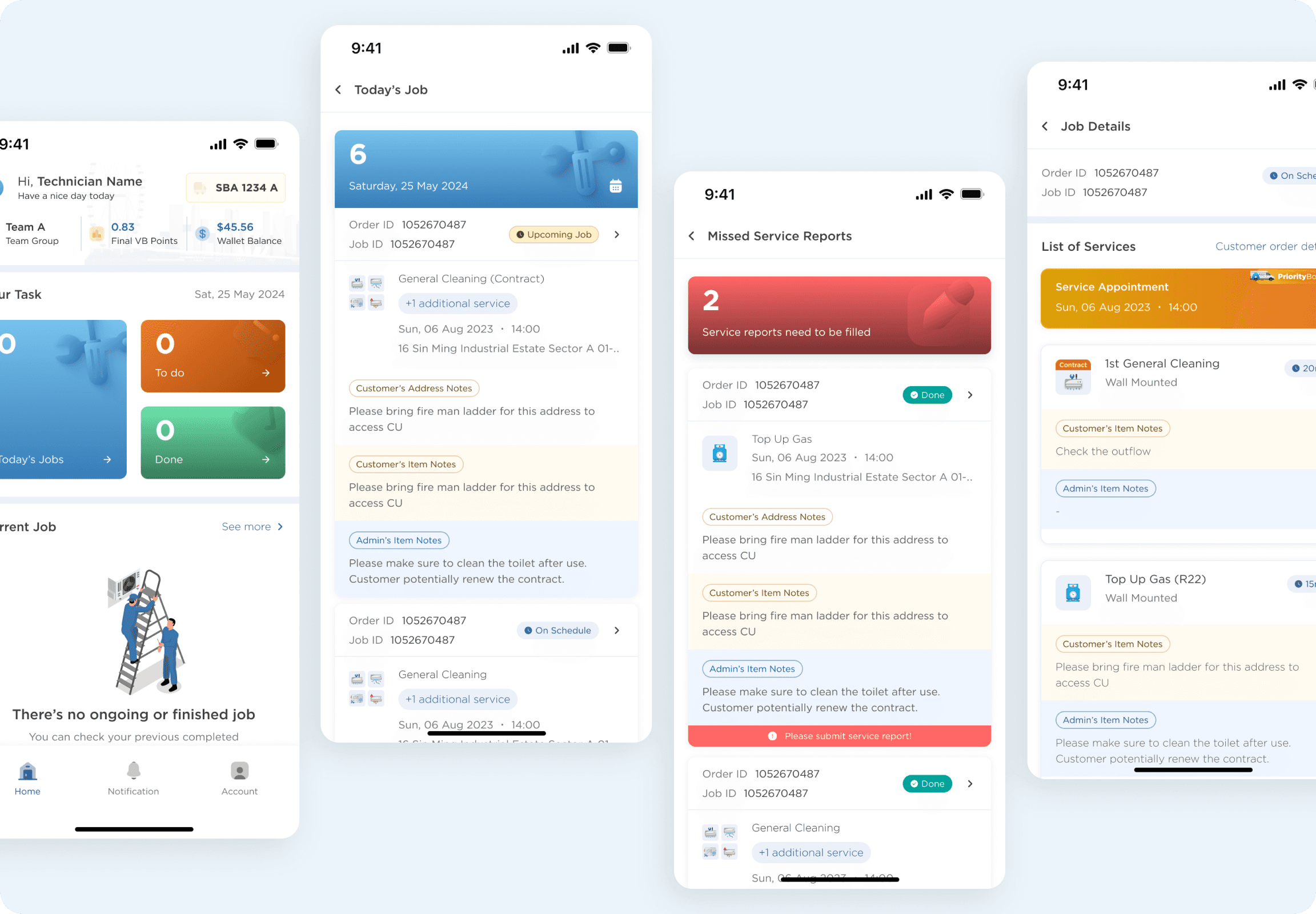
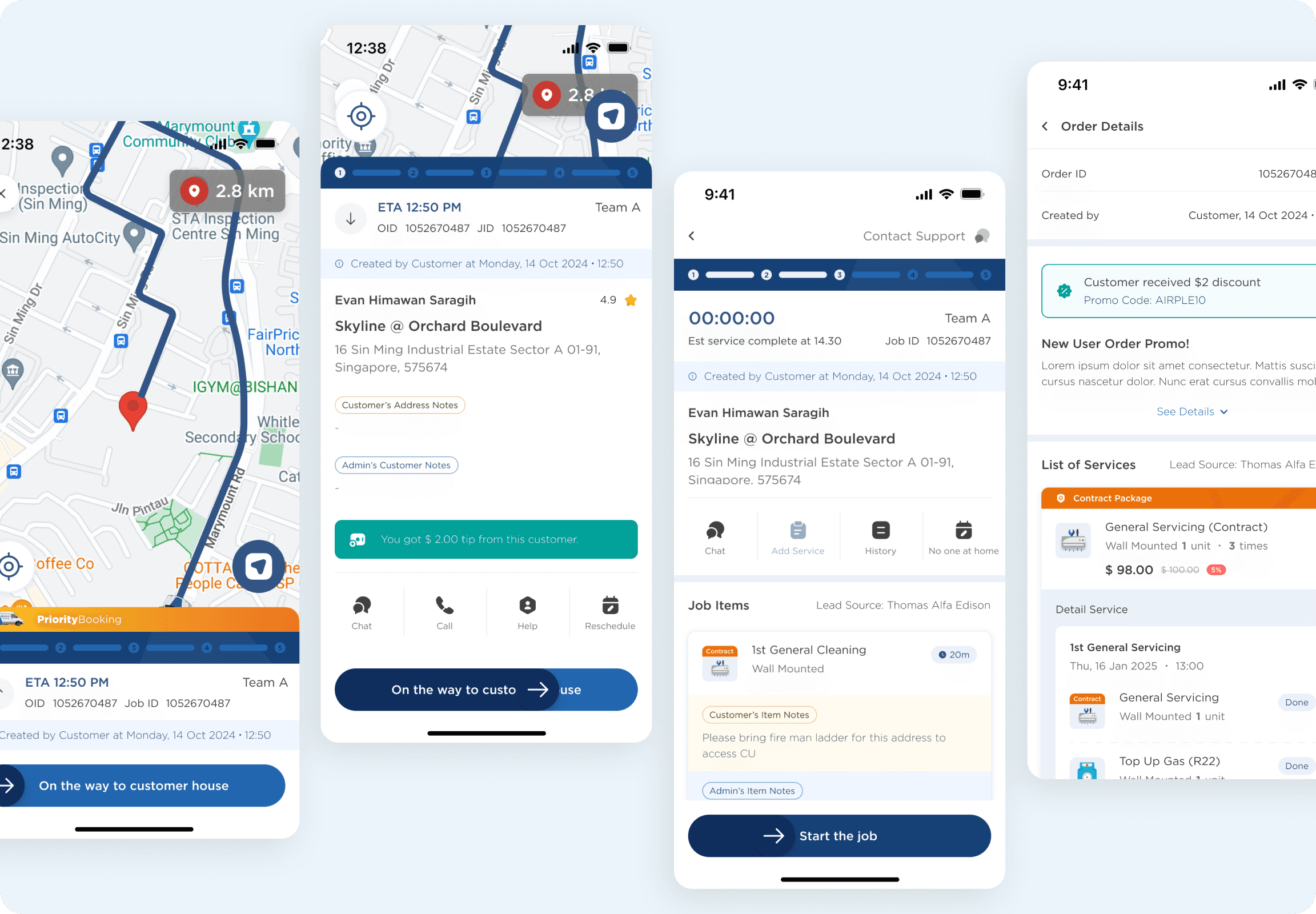
Technician Experience
Provide technicians with structured job information and schedules.
Key principles:
clear daily job list
service checklist
navigation assistance
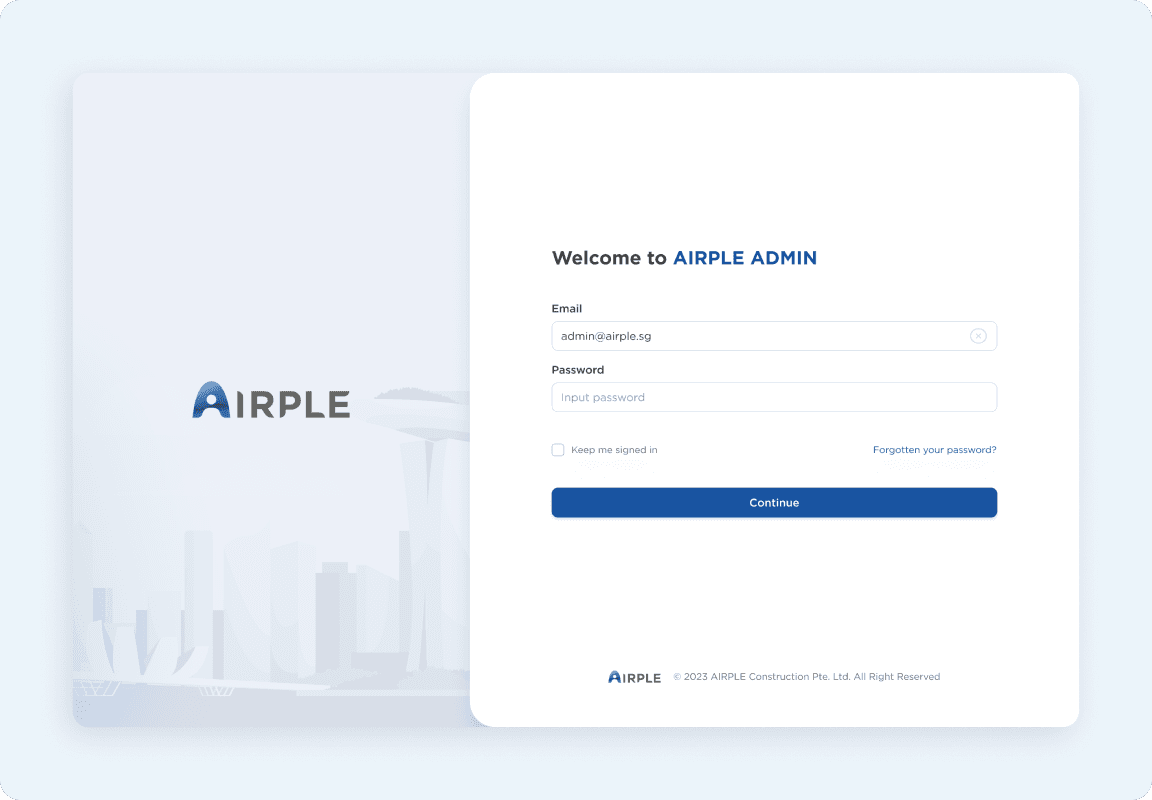
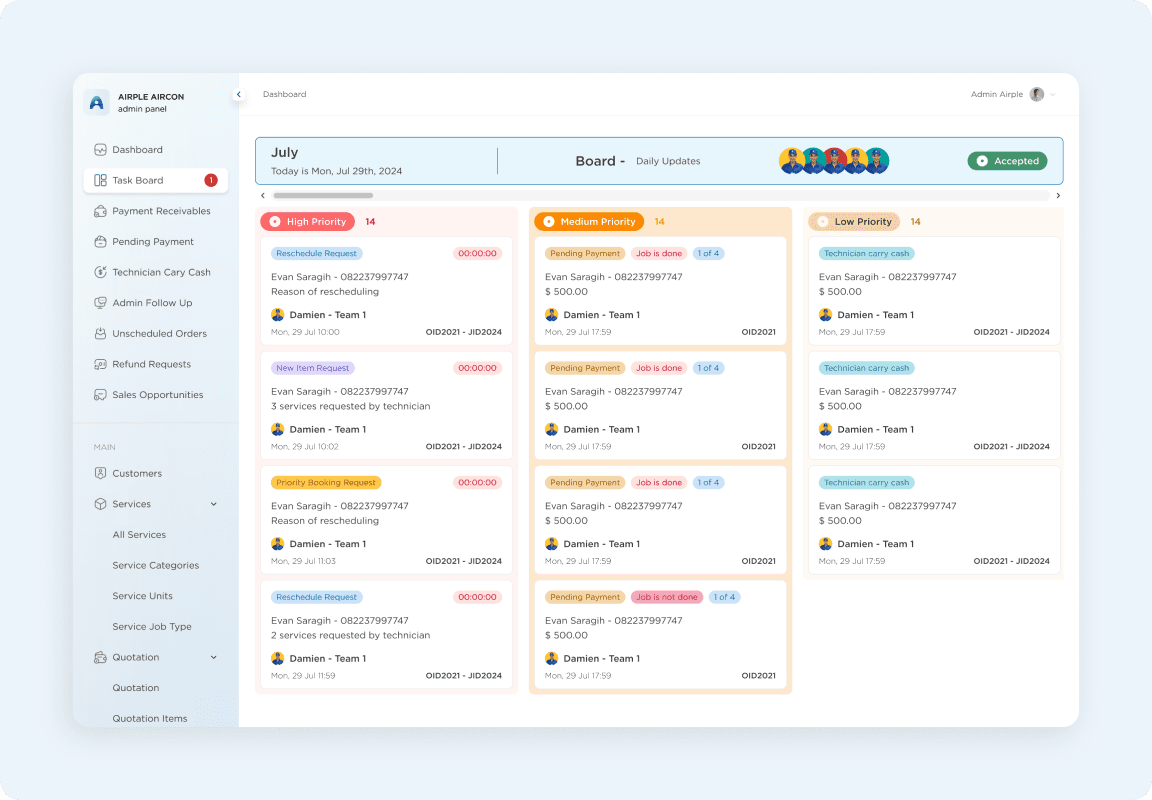
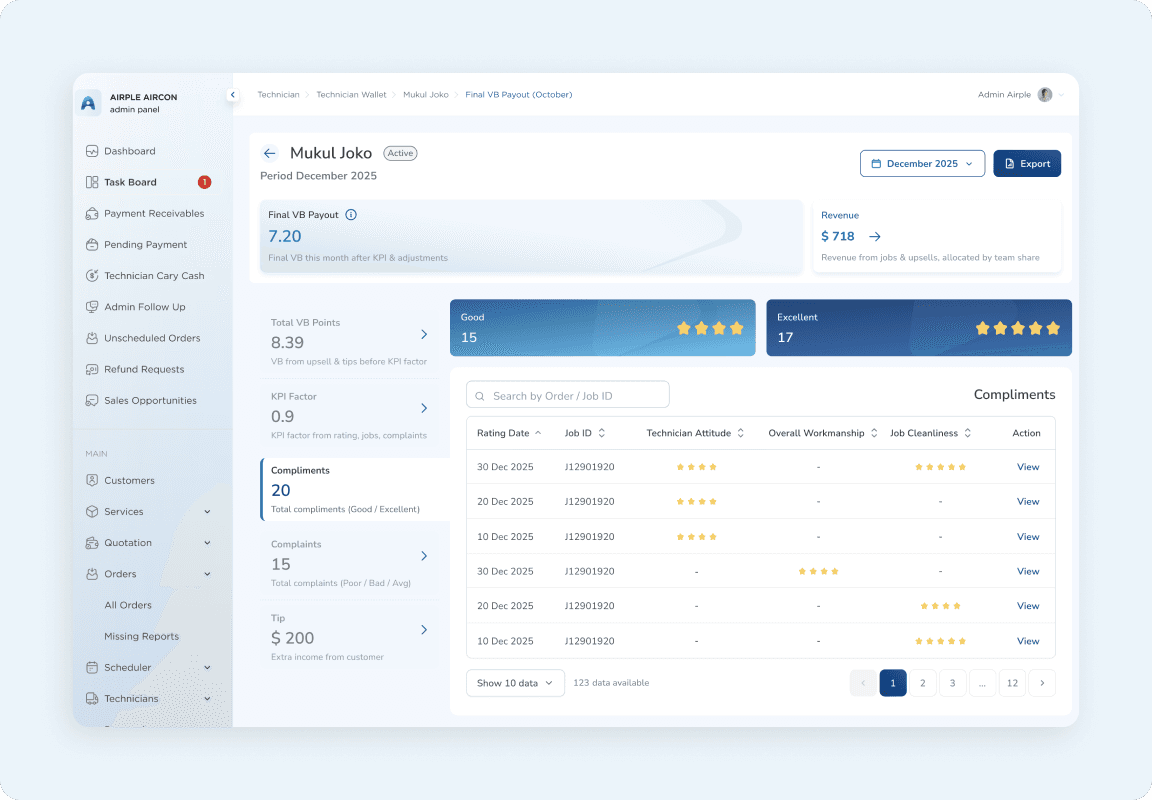
Admin Experience
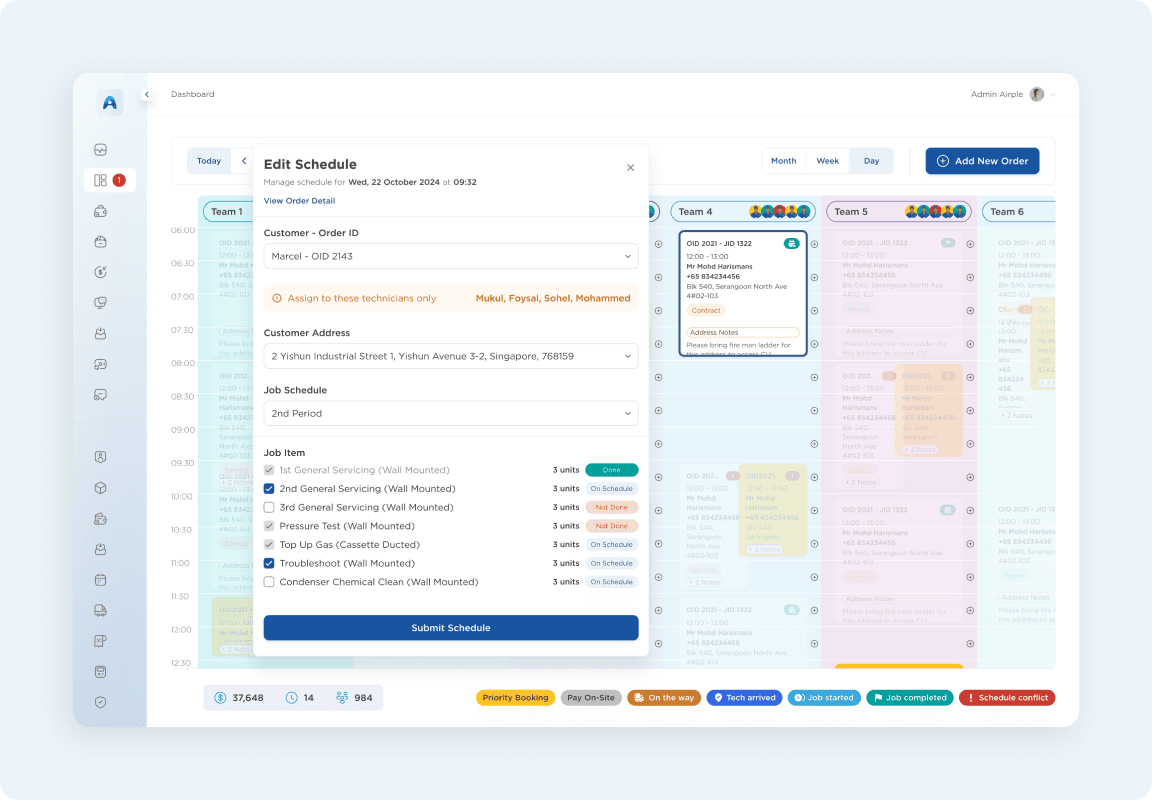
Enable operations teams to manage service requests and technicians efficiently.
Key principles:
service scheduling overview
technician assignment tools
performance monitoring
User Flow
The simplified service booking flow:

The goal was to reduce booking friction and improve transparency at each stage.
Design Exploration
Several booking flow approaches were explored.
Form Based Booking
Initial concept used a multi-step form.
Problem: too many steps created friction.
Quick Booking (Final Direction)
The final approach focused on a simplified booking flow with pre-configured service types. This reduced booking time significantly.
System Design
Airple was designed as a multi-platform ecosystem connecting three different user roles.
Customer App
Booking and service managementTechnician App
Job execution and reportingAdmin Dashboard
Operations management
This structure ensured that each user group could interact with the system efficiently.
The redesigned system streamlined communication between customers, technicians, and operations teams.
Key improvements included:
• simplified booking experience
• improved technician scheduling visibility
• centralized service records
Reflections
One of the most interesting insights from this project was that the biggest challenge was not booking itself, but coordination between multiple stakeholders.
Designing Airple required balancing the needs of three different user groups while keeping the experience simple and efficient.
Future improvements could include:
• predictive maintenance reminders
• service subscription plans
• technician route optimization
Tell Me About Your Next Creative Project
Let’s create captivating digital experiences that engage audiences and drive meaningful brand interactions across diverse platforms
© 2026 Evan Himawan Saragih
Product and UI/UX Designer